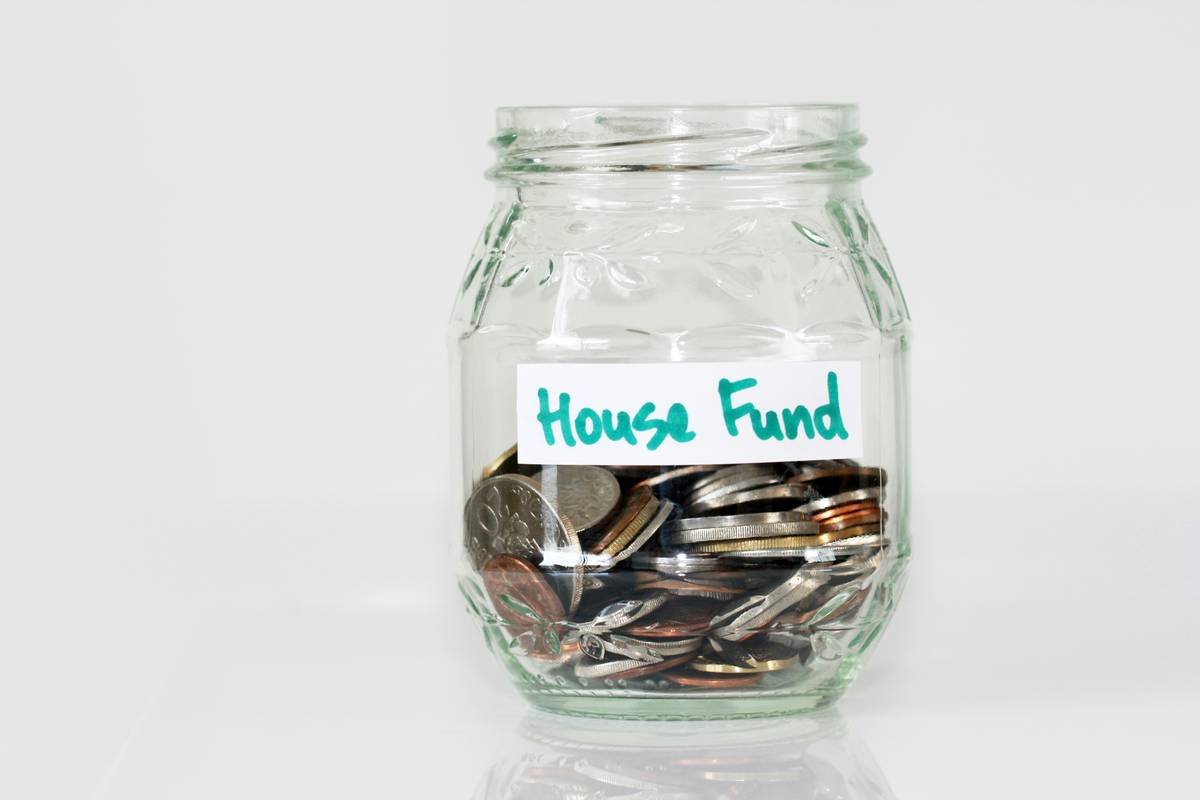
Ever opened your bank app during a crisis—say, a sudden job loss or medical bill—and felt your stomach drop because your “rainy day fund” is drier than a saltine in the Sahara? You’re not alone. According to the Federal Reserve (2023), nearly 37% of U.S. adults couldn’t cover a $400 emergency with cash or its equivalent.
Now imagine layering geopolitical chaos into that mix—foreign asset seizures, civil unrest halting overseas income, or sanctions freezing your accounts. Suddenly, even credit cards and insurance policies start looking shaky. That’s where this post cuts through the noise.
We’ll unpack why “Emergency Fund Assistance” isn’t just about savings apps—it’s about smart financial architecture. You’ll learn:
- Why political risk insurance ≠ personal emergency backup
- How credit cards can masquerade as safety nets (and fail you)
- Real-world steps to build a resilient, liquid emergency fund—even if you’re starting from zero
Table of Contents
- Why Emergency Fund Assistance Isn’t Covered by Insurance
- Step-by-Step: How to Build a Real Emergency Fund
- Best Practices for Emergency Fund Sustainability
- Real Case Study: When Political Risk Hit Home
- FAQ: Emergency Fund Assistance
Key Takeaways
- Political risk insurance protects businesses and investors—not individuals’ day-to-day emergencies.
- Credit cards offer short-term liquidity but come with high APRs (often 20–30%) that can spiral debt.
- A true emergency fund should be liquid, accessible, and held in a separate high-yield savings account.
- Aim for 3–6 months of essential expenses—not arbitrary dollar amounts like “$10K.”
- Automate savings early; even $25/week builds resilience over time.
Why Emergency Fund Assistance Isn’t Covered by Insurance
Let’s get brutally honest: when people hear “insurance,” they assume it’s a catch-all shield. But political risk insurance? It’s built for multinational corporations, infrastructure investors, or exporters—not your car repair or rent gap.
As someone who spent five years underwriting cross-border investment guarantees at a Lloyd’s syndicate, I’ve seen clients confuse sovereign expropriation coverage with personal financial safety. One U.S.-based freelancer working remotely from Argentina thought his “political risk rider” would cover lost income during 2023’s capital controls. Spoiler: it didn’t. His policy only activated if assets were formally seized by the state—not if banks just… stopped wiring dollars. (True story. And yes, he cried in my Zoom call.)

Meanwhile, credit cards? They’re seductive. “Buy now, pay later”? Sure—until the 28.99% APR kicks in. The CFPB’s 2023 Credit Card Survey found that 58% of U.S. cardholders carry revolving balances, paying hundreds annually in interest.
Grumpy You: “So I can’t use my Amex Platinum as my emergency fund?”
Optimist You: “You can… if you enjoy paying $300/month just to keep your radiator fixed.”
Step-by-Step: How to Build a Real Emergency Fund
Step 1: Calculate Your True Essentials (Not Your Lifestyle)
Forget “6 months of salary.” What matters is essential spending: rent, utilities, groceries, minimum debt payments, basic transport. Use the CFPB’s Budget Worksheet to isolate these. For most Americans, this runs $2,500–$4,500/month (U.S. BLS Consumer Expenditure Survey, 2023).
Step 2: Open a Separate High-Yield Savings Account (HYSA)
Do not keep this in checking—it’s too easy to dip into. Choose an FDIC-insured HYSA (e.g., Ally, Marcus, SoFi) earning 4–5% APY. This money must be liquid (accessible within 1–3 days) and penalty-free.
Step 3: Automate Tiny Contributions
Start small. Set up a $25/week auto-transfer. At 4.5% APY, that’s ~$1,350 in one year—enough for most minor emergencies. Scale up with bonuses or tax refunds.
Step 4: Define “Emergency” Strictly
New iPhone? Not an emergency. Broken transmission preventing you from getting to work? Absolutely. Write your own rulebook and stick to it.
Best Practices for Emergency Fund Sustainability
- Never invest it in stocks or crypto. Volatility = unacceptable risk for core safety net.
- Replenish immediately after use. Treat withdrawals like debt repayment—non-negotiable.
- Review annually. Life changes (kids, mortgage, health) shift your baseline needs.
- Avoid “double-dipping” with credit. If you use a card for a true emergency, pay it off from your fund ASAP to avoid interest.
Anti-Advice Alert: “Just max out your credit line—it’s the same as cash!”
No. Just… no. That’s how people drown in minimum payments while their credit score tanks. Emergency Fund Assistance means assistance without strings.
Real Case Study: When Political Risk Hit Home
In 2022, Elena—a dual U.S./Peruvian citizen—ran a remote consulting business from Lima. When Peru’s government froze foreign currency transfers amid protests, her U.S. client payments stalled for 47 days. Her political risk policy (purchased via a boutique insurer) covered “currency inconvertibility”—but only for contracts over $100K. Her monthly income? $6,200.
Luckily, she’d built a $9,000 emergency fund after a prior scare in Venezuela. She survived the freeze without touching credit cards. Post-crisis, she increased her fund to cover 4 months of essentials.
Moral? Insurance has fine print. Cash doesn’t.
FAQ: Emergency Fund Assistance
Does political risk insurance ever help individuals?
Rarely. Most individual policies (e.g., travel disruption) don’t cover income loss. Some expats secure bespoke coverage, but premiums often exceed $2,000/year—better spent building liquid reserves.
Can I use a Roth IRA as an emergency fund?
You can withdraw contributions penalty-free, but it’s risky. Market dips + emergency = forced sales at a loss. Keep retirement and emergency funds separate.
What if I have high-interest debt? Save or pay it off first?
Hybrid approach: build a mini-fund ($500–$1,000) first, then attack debt. Why? Without a buffer, new emergencies trigger more debt—perpetuating the cycle (NBER, 2021).
Are HYSAs safe if the bank fails?
Yes—if FDIC-insured. Funds up to $250,000 are protected by federal guarantee, backed by the full faith of the U.S. government.
Conclusion
Emergency Fund Assistance isn’t a product you buy—it’s a behavior you build. Political risk insurance protects assets abroad; credit cards offer expensive, temporary liquidity. But only cold, hard cash in a dedicated account gives you true peace of mind when life punches you in the wallet.
Start small. Automate. Guard it fiercely. Your future self—staring down a flat tire, layoff notice, or frozen paycheck—will thank you.
Like a 2000s Nokia brick phone: unsexy, indestructible, and always there when you need it.